David
alive — trappedDavid
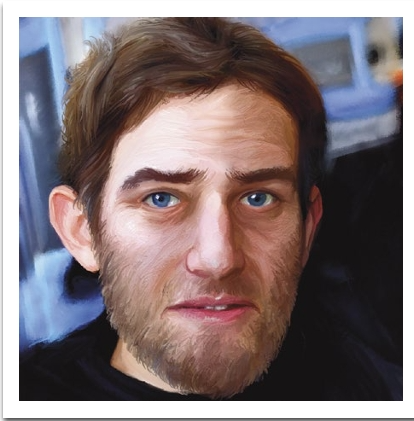
A living man found behind a typewriter beyond another barred door in The Night Floors (Session 6) — the door opened, as before, only on a failed Sanity roll. Not a puppet, not a sleeper: himself, awake, and desperate.
What He Says
- His name is David. He begs the crew to get him out.
- He came to repair the cable and has been trapped ever since.
- He believes the year is 1995.
- He has seen other people who are strange and have no faces.
- The longer you stay, the harder it is to get out.
The crew calmed him down and got him moving out of the room with them (Session 6).
Faceless People, and an Empty Typewriter
David reports **faceless people** in the night floors — the mask motif (Henry Lundine's mask, The Masked Books, the gas masks) at its endpoint: **no face at all.** And the **typewriter he sat at has no paper in it** — twenty years of a man "writing" **nothing**, or writing onto a page the building takes. Either his witness is unreliable, or the night floors consume the text as fast as it's made.
"The Longer You Stay, the Harder It Is to Get Out"
David corroborates the trap from the inside: it isn't a fixed lock, it **deepens with time.** The crew is on a clock they can't read (his 1995 vs. their 2015). Every scene they stop to investigate is time spent sinking in.
Twenty Years, and Still Awake
On-screen it is **late 2015**; David thinks it's **1995.** He has been trapped in the night floors for roughly **two decades of outside time** — a workman who walked in to fix a cable and never left, the same trap that took Sterling Horselover (locked roof) and Amy Langon (into the museum, never out). But unlike the marionettes or the drugged tenants, David is a **lucid, surviving witness** — the first person the crew has met inside who can actually talk.
At a Typewriter, in a Library
David is found **writing** — a man at a **typewriter** in the library of books where dreams are volumes and the scripts write themselves. A captive at a typewriter in a self-writing building begs the question of **who has been producing the text** all along.
Open Questions
- Is time inside the night floors decoupled from outside — 1995 for him, 2015 for the crew?
- What has he been typing for twenty years, and is it feeding the library / the self-writing scripts?
- Can he actually leave — and does the door's inverted lock (only the giving-way get in) mean there's no way out?
- "Came to repair the cable" — cable TV, 1995. Any tie to the Box 13 production or Art Life?